How to Care for a Turned Wooden Bowl
Simple habits protect the wood, the finish and the relationship between a useful object and its owner.
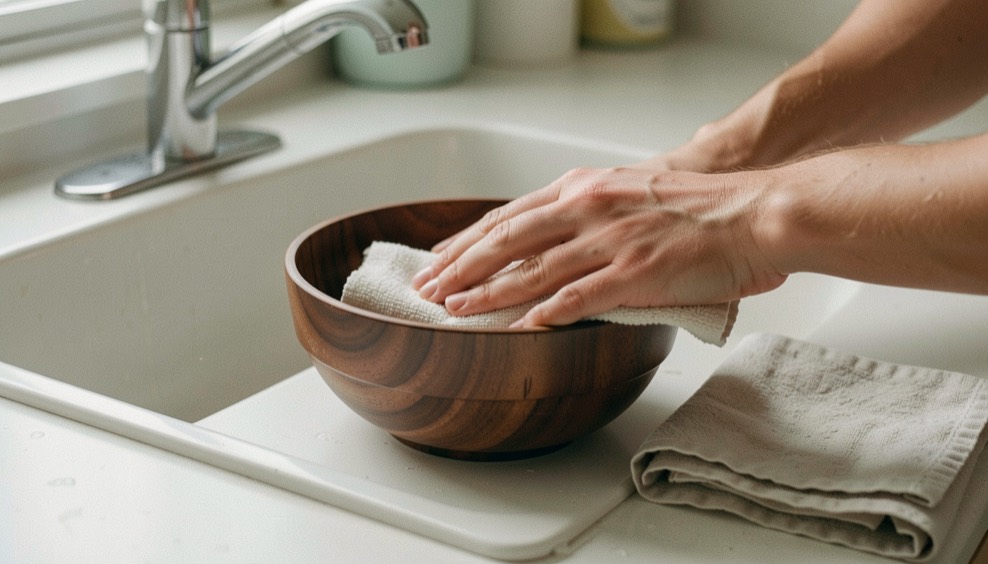
Keep water brief
Wood moves with moisture. Wash a bowl by hand, avoid soaking and dry it promptly. A dishwasher, harsh heat or a long stay beside a radiator asks more of the object than it was designed to give.
Watch the surface
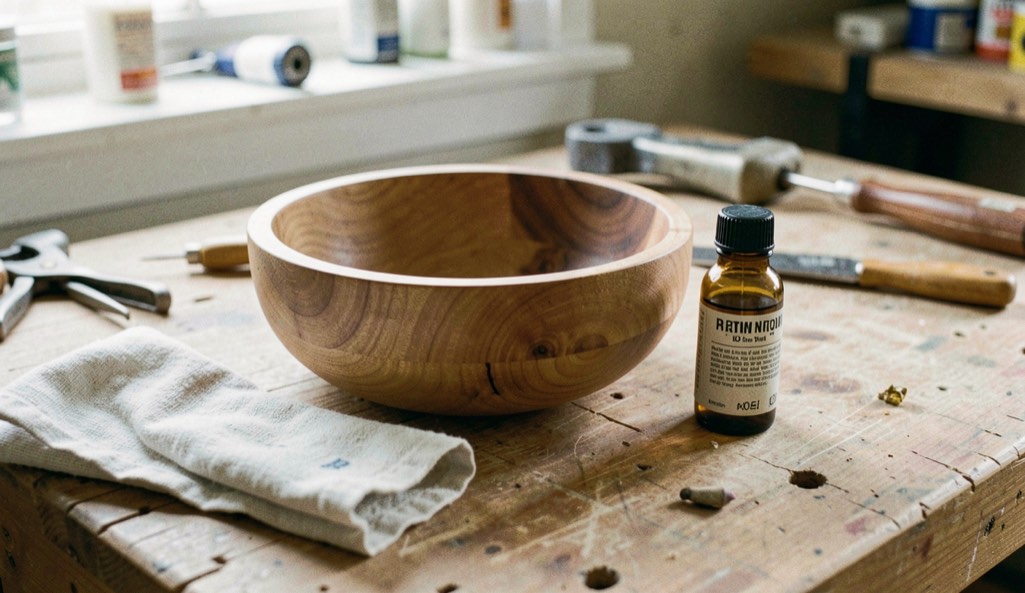
A dry or dull area may need the finish maker’s recommended refresher, not an improvised coating. If a crack opens, stop using the bowl for food until its condition is understood. The species notes explain why different woods respond differently.
Let use be visible
Small marks are part of a handmade object’s life. Care is not about freezing the surface. It is about giving the wood a stable rhythm of use, cleaning and rest.
Build a simple care rhythm
Hand wash a useful wooden bowl with mild soap, rinse briefly and dry it immediately with a towel. Do not leave it submerged, in a dishwasher or pressed against a hot radiator. Alternate use and rest so the wood can respond to normal humidity without repeated extremes. The exact surface routine depends on the finish, so retain the maker’s care note rather than assuming every oil or film behaves alike. A dry fruit bowl and a wet salad bowl should not be given identical instructions.
Read damage before treating it
A dull patch may be normal wear, residue or a finish that has not cured properly. A raised grain line may respond differently from a split that moves under light pressure. Stop using a bowl for food if a crack opens, an edge becomes sharp or the finish flakes. Photograph the area, note where the bowl was stored and contact the maker or product manufacturer before sanding or adding another coating. An improvised repair can trap moisture and make the original cause harder to see.
An owner’s example
For a cherry bowl used for dry apples, a weekly wipe and occasional approved refresh may be enough, while a maple salad bowl needs prompt washing and drying after each use. Keep it away from direct sun if color change is a concern, and use a pad on a rough stone table. Small marks are not automatically defects. The limit is structural: care can slow wear, but it cannot reverse a badly checked blank, unsafe finish or movement caused by unsuitable storage.
When to return the bowl
A bowl that rocks, splits, smells of uncured finish or exposes a sharp edge should leave service until the condition is assessed. Do not clamp a crack shut, flood it with oil or sand through a food surface without understanding the structure. Contact the maker with photographs, species and care history. A repair may be possible, but a replacement can be the more honest choice for food use. Care is successful when it preserves safe use and makes the object’s limits visible, not when every mark is disguised.
Precise safety and material claims are grounded in the editorial methodology; workshop guidance is identified as practical synthesis.