A Lathe Safety Checklist Before the First Cut
A short pause around the machine protects attention, hands and the work itself.

Before power
Check that the work is held securely, the tool rest is close without touching, and the area around the lathe is clear. Wear eye and face protection suited to the work and tie back anything that can catch.
During the cut
Stand out of the line of fire when the piece first spins, increase speed only when the work is stable, and keep both hands in a controlled relationship with the tool. Stop the machine before measuring or adjusting.
After the stop
Unplug or isolate the machine as required before maintenance. Read the official [OSHA woodworking guidance](https://www.osha.gov/etools/woodworking) and keep local rules ahead of a general checklist. The wood dust guide covers the less visible risk.
Secure the work before power
Inspect the blank for cracks, loose bark, voids and a center that will hold. Confirm the chuck or drive center is seated, tighten the work according to the manufacturer’s instructions and remove the chuck key. Set the tool rest close to the work with the spindle stopped, then rotate the piece by hand to check clearance. Wear eye and face protection, secure hair and clothing, and keep the floor clear. Stand out of the likely line of fire for the first start, especially with an irregular blank.
Control the first rotation
Start at the lowest appropriate speed and watch for movement, vibration or a shifting hold. Stop immediately if the blank walks, the rest touches the work or the machine sounds different. Increase speed only after the shape is balanced and the stance is stable. Keep the tool supported on the rest and never reach over a spinning piece to adjust a control. Measuring, changing jaws and clearing shavings happen with power isolated, not during a quick pause that can become an assumption.
Safety includes the invisible work
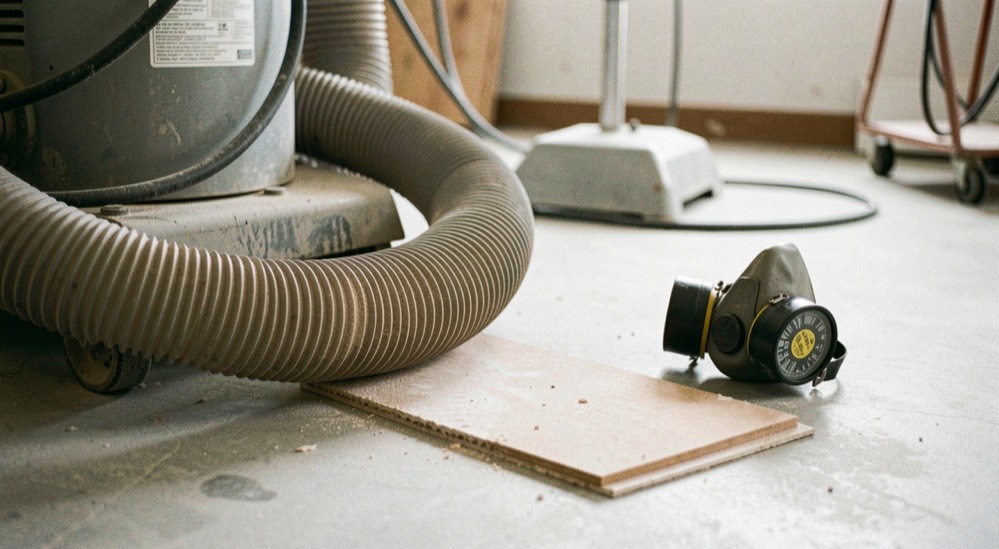
Dust, noise, sharp edges, finish vapors and repetitive strain accumulate across a session. Capture dust near sanding, use respiratory protection selected for the task, ventilate finishes and take breaks before fatigue changes the grip. Follow the machine manual, local rules and official woodworking guidance rather than treating this checklist as a substitute for training. A practical example is to write a stop point on the bench: any crack, new vibration or uncertain hold ends the cut until the cause is understood.
Use a stop rule
Write three conditions that end the cut immediately: a new vibration, a visible crack or a hold that cannot be confirmed. Add a fourth for fatigue. Stop the machine, wait for the piece to finish moving and investigate with power isolated. Do not let a nearly finished form or an audience turn a warning into a challenge. A checklist works because it creates permission to stop before instinct negotiates. Review the manual and local requirements when the machine, workholding method or respiratory protection changes.
Precise safety and material claims are grounded in the editorial methodology; workshop guidance is identified as practical synthesis.