Wood Dust Controls for a Small Turning Shop
Ventilation, capture and housekeeping work together. A dust mask alone is not a shop plan.
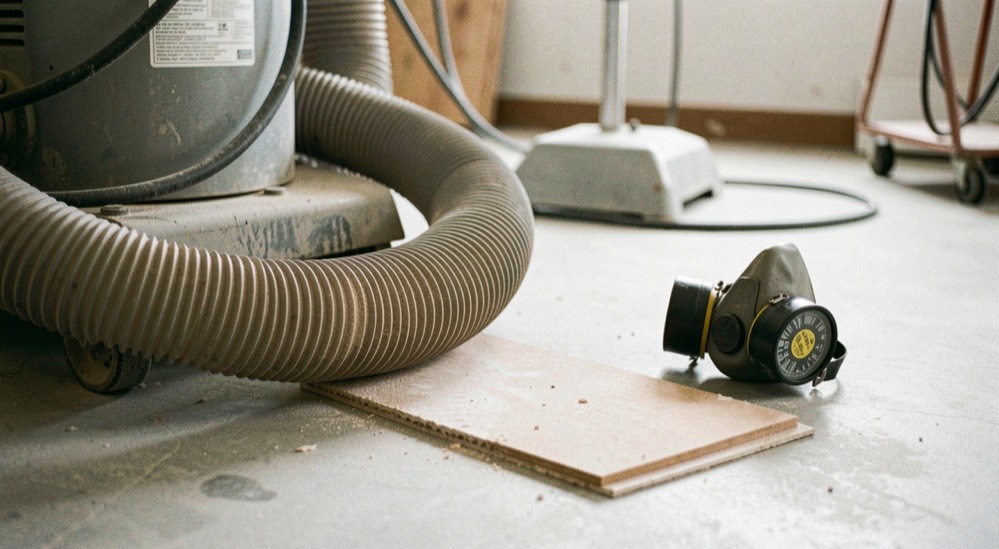
Capture at the source
Fine dust travels. Put collection as close to the operation as practical, keep hoses and filters in good condition, and do not let a tidy-looking bench hide a dusty floor or beam. OSHA’s [wood dust guidance](https://www.osha.gov/etools/woodworking/production/wood-dust) is the source for the health context.
Separate tasks
Turning, sanding and sweeping create different dust patterns. Allow the air to clear, use the protection appropriate to the task, and avoid blowing settled dust into a cloud. A small shop benefits from a written routine more than from a single expensive accessory.
Keep learning
Safety changes with the machine, the finish and the room. The lathe checklist belongs next to this guide, and the six-week plan builds a habit of reviewing the shop before the project.
Capture before dust spreads
Fine dust is easier to control at the cutting or sanding point than after it has settled across a room. Position collection close to the operation, keep hoses open and inspect filters, seals and bags. A lathe hood that works for sanding may interfere with tool access, so test the arrangement with the machine off before committing to a cut. Source capture, room ventilation and suitable respiratory protection are layers, not interchangeable solutions. Follow current official guidance for the species and equipment in your shop.
Treat sanding as its own hazard
A clean turning cut can leave little dust, while power sanding creates a concentrated plume and coats nearby surfaces quickly. Reduce unnecessary sanding by improving the edge and cut, then capture the remaining dust at the abrasive. Do not use compressed air to blow settled dust into the breathing zone. Sweep or vacuum with equipment suited to fine particulate, and allow the air to clear before removing protection. A small shop needs a written sequence because memory is unreliable after a long session.
Know the limits of a mask
A respirator or dust mask is part of a control plan, not permission to ignore source capture, fit or filter maintenance. Facial hair, a poor seal and a saturated filter can change protection. Wood species, finishes and existing health conditions may require specific professional advice. For example, a turner who sees dust on the floor after sanding should improve capture and housekeeping rather than simply choosing a heavier mask. Stop work if irritation or breathing symptoms appear and seek appropriate help.
Audit the room after sanding
Use a bright side light to inspect the floor, ledges and nearby tools after a sanding session. If dust remains, identify whether the source is capture position, airflow, filter loading, leaks or housekeeping rather than assuming the remedy is more respiratory protection. Keep finish vapors separate from dust-control assumptions and follow each product’s ventilation requirements. A written cleanup interval can protect other people who enter the shop later. The goal is a lower exposure environment, not a room that merely looks clean from the operator’s chair.
Precise safety and material claims are grounded in the editorial methodology; workshop guidance is identified as practical synthesis.