A Calm Practice Routine for New Woodturners
Short, repeatable sessions build better tool control than chasing a finished object every time.

One motion at a time
A practice session can be as small as mounting a straight-grained blank, making a cylinder, and returning the tool to the rest before the cut feels hurried. Repeat one motion until your hands recognize the relationship between bevel, edge and presentation. The point is not a perfect souvenir. It is a calmer next cut.
Keep a small record
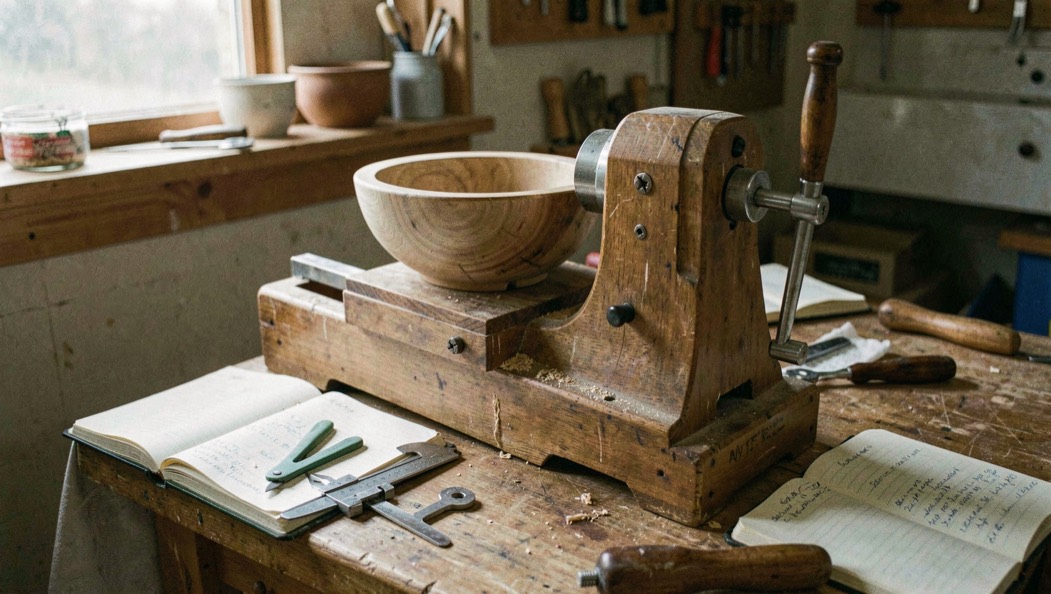
Write down the wood, the tool, the speed setting and one sentence about what changed. This turns vague frustration into a pattern you can revisit. A species note from the Wood Species Desk is a useful companion because grain and moisture often explain a surprising surface.
Stop while the lesson is clear
End a session when the work is still readable. Clean the floor, cover the machine, and sharpen before the next visit. That small closeout makes the next start easier and keeps the shop from becoming another obstacle.
A session with a measurable aim
Choose one cut before switching on. A useful first exercise is to turn a beech or basswood cylinder, mark three bands, and practice a supported peeling cut without trying to make a finished object. Record the tool, rest height, approximate speed and the surface left behind. The exercise is specific enough to compare tomorrow, but forgiving enough to reveal technique rather than punish it. If the blank is visibly cracked, resinous or badly mounted, replace it. Practice cannot compensate for unsafe stock.
Use the tool rest as a reference
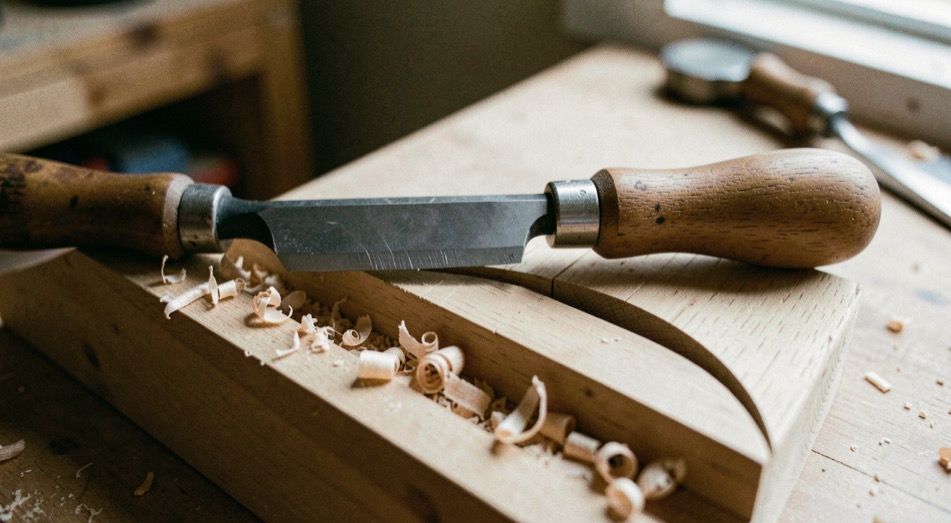
Bring the rest close to the work and keep the cutting edge at a height that lets the bevel contact the wood before the edge takes a bite. Move from the elbow and shoulder rather than steering only with the wrist. Stop the lathe to inspect the surface, then sharpen when the ribbon becomes dusty or the tool begins to demand pressure. A common error is chasing speed because the first cylinder looks slow. Slower cuts are useful when they let a new turner identify presentation, grain direction and tool support.
A six-session example
In session one, make cylinders; in session two, add a bead with a parting tool for reference marks; in session three, compare a bowl gouge cut in maple and pine; in session four, repeat the cleaner motion; in session five, sand only after the cut is understood; in session six, make a small object and write its limitations. End every visit by sweeping shavings, checking the tool edge and noting one question. The routine succeeds when observations become more precise, not when every practice piece becomes a gift.
Measure learning by decisions
After each session, circle one decision that became clearer: when to sharpen, when to stop, how close to set the rest or which grain direction changed the cut. That record is more useful than counting finished objects. If progress stalls, reduce the diameter, change to sound straight-grained stock or ask an experienced turner to watch the setup. Do not solve uncertainty by gripping harder or increasing speed. A calm practice routine has a boundary, a cleanup step and a next question. Those details turn a short visit into a durable skill rather than another unfinished project.
Precise safety and material claims are grounded in the editorial methodology; workshop guidance is identified as practical synthesis.