Why Place Matters in Green Wood
A regional material culture begins with what is close at hand, then grows through exchange and care.
A forest is not a color palette
Regional wood carries practical information: how it was grown, when it was cut, how it was stored and what a maker can responsibly use. The species desk keeps that material conversation visible without treating locality as a guarantee.
The studio is part of the record
A maker’s choices reveal a relationship between tools, season and available stock. That does not make every local board predictable. It makes attention to source and moisture worthwhile.
Keep the exchange open
New England turning culture is shaped by clubs, teachers, lumber yards and independent studios. The training hub and maker notebook are starting points for readers who want to participate.
Place changes the material question
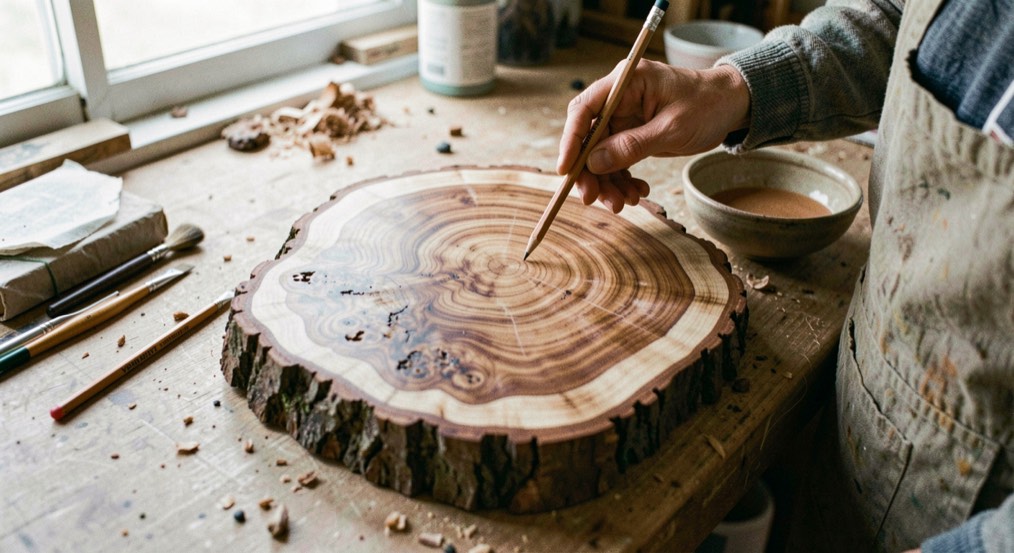
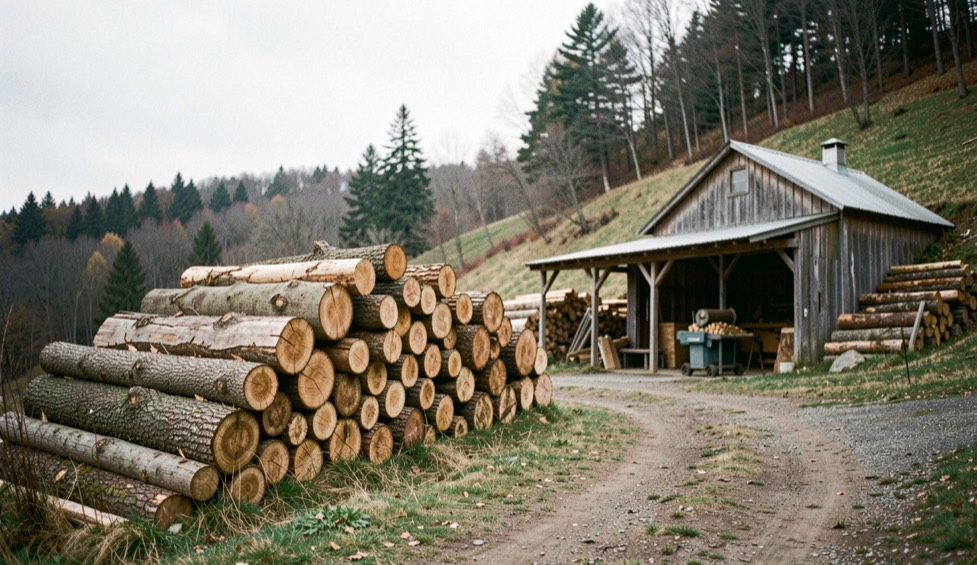
A local log is not a uniform resource or a shortcut to quality. Species, growth rate, storm damage, harvest timing, storage and the distance from forest to shop all influence what a turner receives. Ask where the wood came from, whether it was salvaged or deliberately cut, and how the blank was stored. Vermont and New England species can be excellent for bowls and spindles, but locality does not remove checks, tension or invasive-species concerns. A responsible maker records uncertainty rather than turning origin into a guarantee.
Season, tools and stock meet in the studio
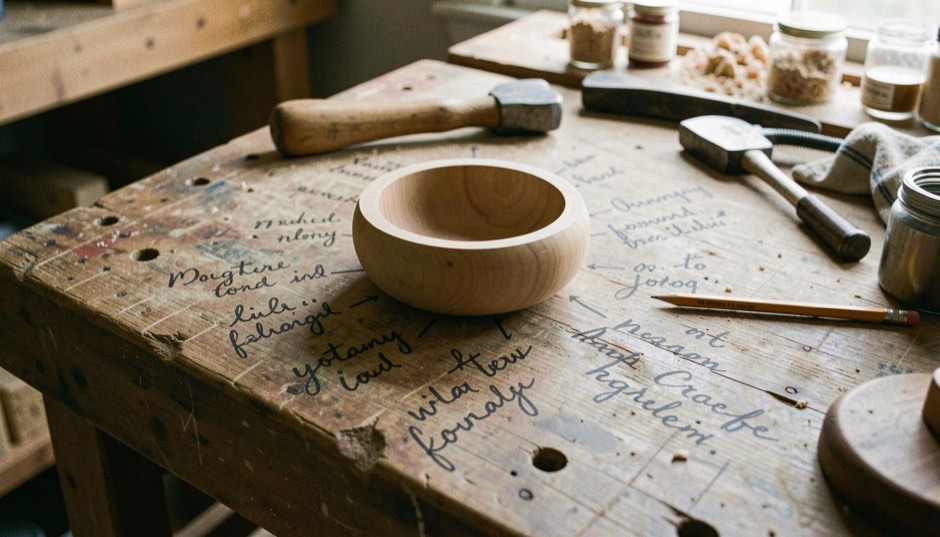
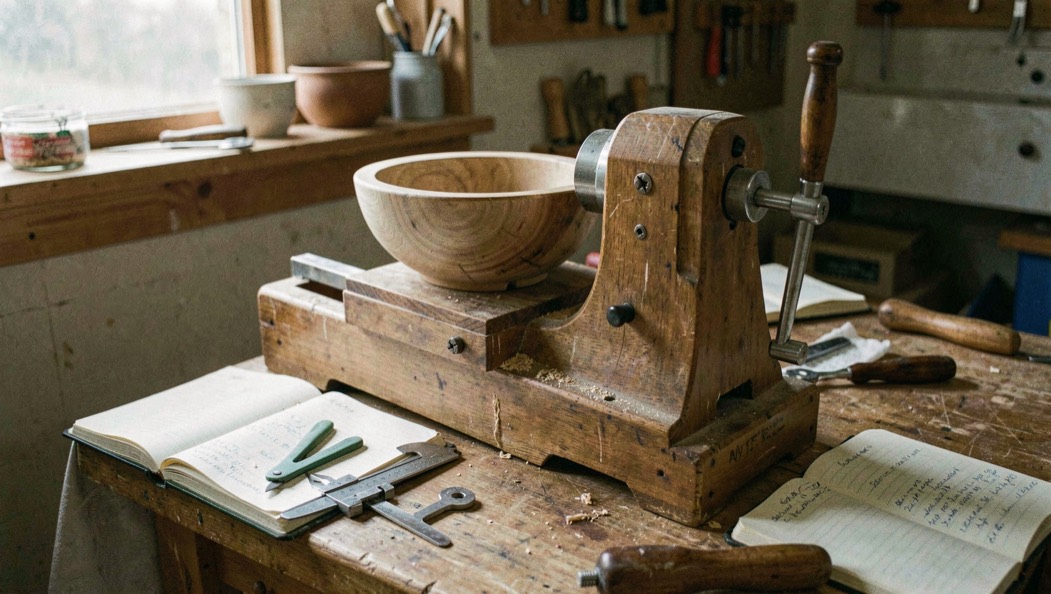
A maker working with green wood may favor rough-turned bowls, broad gouges and a drying shelf, while a furniture-oriented studio may select dry blanks, sharper spindle tools and more predictable joinery. Neither practice is automatically more authentic. Observe the setup: the tool edge, the blank thickness, the moisture note and the way shavings are handled. These details make material culture concrete. Safety still travels with the work, including face protection, dust control and a clear plan for irregular stock.
An exchange that can be tested
Visit a reputable lumber source, turning club or demonstration and ask a specific question about a species or process. Bring back a small note, not a romantic claim. For example, compare a locally milled cherry blank with the drying record from a purchased board, then see how both behave in the same small bowl workflow. The result will be limited by sample size and shop conditions, but that is useful knowledge. Place matters when it sharpens attention, stewardship and conversation.
Stewardship is part of technique
Ask whether a local source can explain harvest, salvage, storage and species identification, especially when bark, leaves or disease complicate the story. Use only stock that can be secured and dried responsibly. A turner can honor place by wasting less, planning around defects and sharing a drying observation with the next maker. The result may be a smaller bowl, a spoon blank or firewood rather than the imagined centerpiece. That adjustment is not failure. It is a material decision grounded in the forest and the shop together.
Precise safety and material claims are grounded in the editorial methodology; workshop guidance is identified as practical synthesis.