Studio Notebook: Reading a Burl
A burl rewards patience because its grain changes the plan before the lathe ever starts.
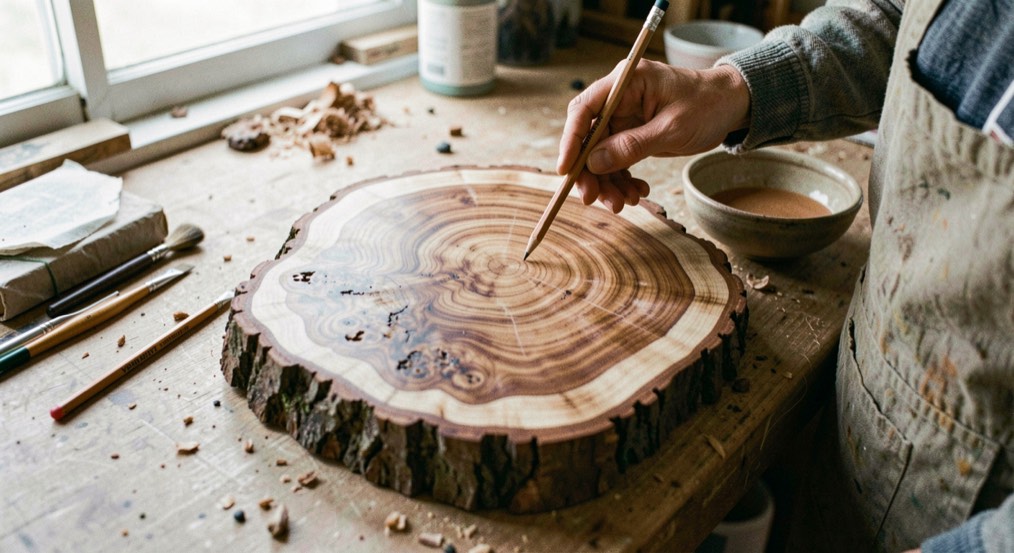
Inspect the outside
Look for checks, voids and the direction of the swelling. A burl is a set of possibilities, not an instruction. Mark the likely center and imagine where the most expressive grain might survive.
Allow for uncertainty
Holding, roughing and drying can expose a different story. Leave room in the plan for a smaller form or a filled void only when the design and material support it. The small bowl workflow gives a steady baseline.
Document the choice
A photograph, species note and moisture observation make the next burl less mysterious. That is the value of a notebook: it turns a singular object into a useful lesson without pretending it can be repeated exactly.
Inspect before the lathe
Photograph the burl from several sides, mark visible checks and sketch the likely grain path before cutting. Look for voids, bark inclusions, loose sections and a pith or branch union that may weaken the mounting. A burl can reward an off-center orientation, but eccentric work changes the line of fire and demands careful speed control. Start with sound material and a holding method appropriate to the shape. If the bark is loose or the blank cannot be secured, the interesting grain is not worth the risk.
Let the material revise the form
Roughing may reveal a void where the imagined bowl was supposed to be solid, or a swirl that works better in a smaller vessel. Reduce speed, take light supported cuts and stop often to inspect the wall. Do not fill every void automatically. A stable, compatible fill can be part of a design, but it cannot restore structural strength or make rotten material safe. A burl may also move during drying, so leave a documented allowance or choose a dry, smaller form.
Record what another burl can teach
Write the species if known, source, dimensions, moisture observations, orientation, tool geometry and the point where the plan changed. Include photos of the raw blank and the finished surface. For example, a notebook may show that a particular maple burl checked near bark inclusions and needed a wider foot, while another cut cleanly across the swirl. That record is valuable precisely because it is not a recipe. It identifies a pattern without pretending every burl will repeat it.
Decide what not to save
A burl can make a turner keep cutting after the structure has become unsafe or the design no longer serves the material. Establish a stop point before the lathe: loose bark, a widening crack, a failed hold or a wall too thin for the intended use ends the experiment. Save a sound offcut for a later study and document the rest honestly. The most useful notebook entry may describe a discarded blank and the evidence behind that decision. Good turning includes knowing when the grain is not worth the risk.
Precise safety and material claims are grounded in the editorial methodology; workshop guidance is identified as practical synthesis.